
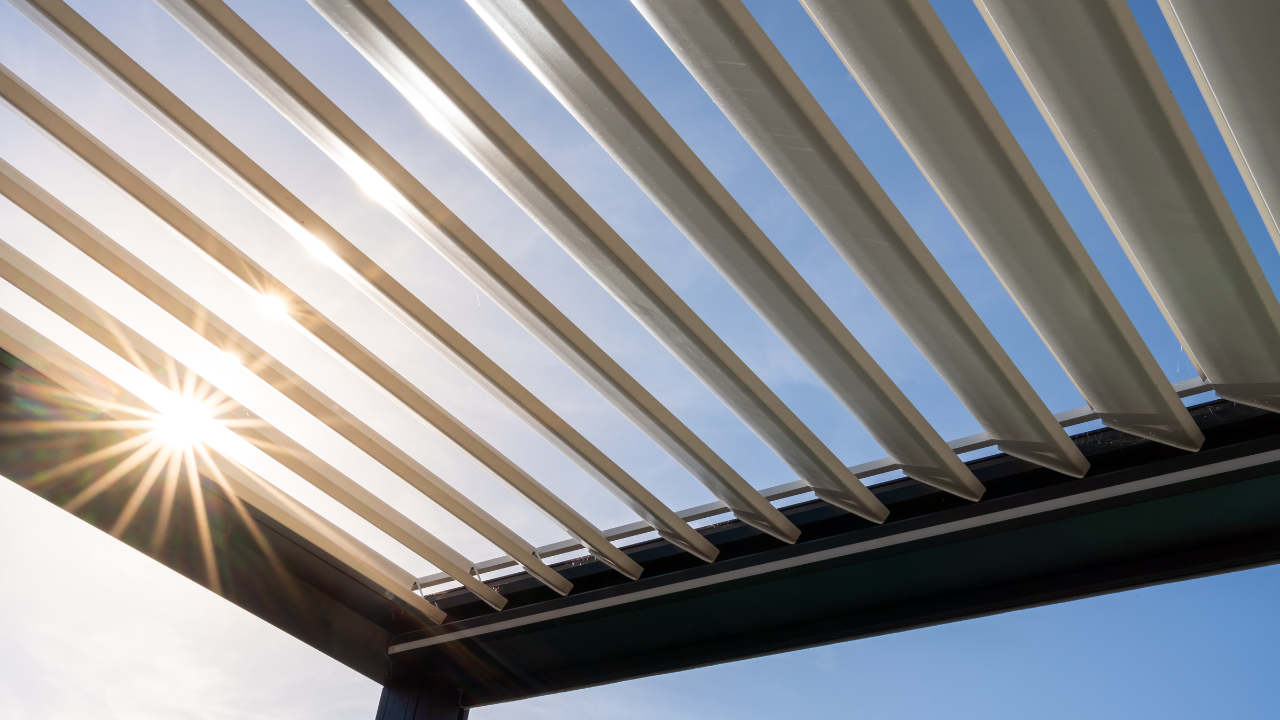
When considering outdoor structures to enhance your garden or patio, the choice often comes down to a louvred gazebo or a traditional pergola. Both offer shade, style and functionality, but they differ in design, flexibility and overall benefits. Understanding these differences will help you make the best choice for your outdoor space.
What is a louvred gazebo?
A louvred gazebo is a modern outdoor structure equipped with adjustable louvres on the roof. These louvres can be tilted to control the amount of sunlight or shade you want, providing a versatile solution for different weather conditions. The ability to open and close the louvres means you can enjoy the outdoors regardless of the season. On a sunny day, you can open the louvres to let in natural light, while on rainy days, you can close them to keep your outdoor area dry.
A louvred gazebo is often made from durable materials like aluminium or steel, ensuring it withstands harsh weather conditions. This makes it a long-lasting investment for your garden or patio.
What is a traditional pergola?
A traditional pergola is an open structure with crossbeams but no roof. It provides partial shade and serves as a framework for climbing plants like vines or roses. Pergolas are often made from wood, though they can also be constructed from metal or vinyl. The primary function of a traditional pergola is to create a shaded walkway, passageway or sitting area while maintaining an open and airy feel.
While traditional pergolas offer a timeless charm and can be designed to fit various architectural styles, they do not provide full protection from the elements. Rain or intense sunlight can pass through the open beams, which might limit the usability of the space under certain weather conditions. However, the open design of a pergola allows for better air circulation, which can be useful during hot summer days.
Key differences between louvred gazebos and traditional pergolas
The louvred roof is the most significant difference between a louvred gazebo and a traditional pergola. The adjustable roof of a louvre gazebo offers a level of control and protection that a traditional pergola cannot match. With the ability to close the louvres, you can enjoy your outdoor space even during rain or extreme heat, and your furniture is protected from harsh weather conditions, too. In contrast, a traditional pergola’s open roof structure does not offer this flexibility, making it more suitable for areas where rain is infrequent, and the focus is on creating a space that blends seamlessly with the natural environment.
Another key difference lies in the materials used. Louvred gazebos are typically made from modern, weather-resistant materials like aluminium, which require minimal maintenance and are designed to last. Traditional pergolas, especially those made from wood, may require more upkeep, such as staining or sealing, to prevent damage from weather and pests.
The aesthetic appeal of each structure also varies. A louvred pergola brings a contemporary look to your outdoor area, with clean lines and a minimalist design. It’s ideal for those who prefer a modern style. On the other hand, a traditional pergola offers a more rustic and classic appearance, making it suitable for gardens with a traditional or natural aesthetic.
Choosing the right structure for your needs
When deciding between a louvred gazebo and a traditional pergola, consider your specific needs and preferences. If you’re looking for an outdoor structure that offers versatility, weather protection and a modern design, a louvred gazebo may be the ideal choice. Its adjustable roof provides the flexibility to enjoy your outdoor space in various weather conditions, and it has a more durable construction than most traditional pergolas.
If your priority is creating a natural, airy space that enhances the beauty of your garden, a traditional pergola might be more suitable. The open design of a pergola allows for natural light and air to flow through, making it an excellent choice for those who want to cultivate climbing plants or simply enjoy the outdoors in a more organic setting.
Installation and maintenance considerations
Installing a shade-style gazebo typically requires professional help due to its complexity and the need for precise alignment of the louvres. The installation process may take a few days, depending on the size and design of the gazebo. Once installed, the maintenance is relatively straightforward, with most tasks involving regular cleaning to remove debris from the louvres and occasional checks to ensure the motorised system (if applicable) is functioning correctly.
A traditional pergola, especially those made from wood, may be easier to install, though professional installation is still recommended for larger or more complex designs. Maintenance for a traditional pergola depends on the materials used. Wooden pergolas require more upkeep, including regular sealing or staining, to prevent weather damage. Metal or vinyl pergolas are generally lower maintenance, requiring only occasional cleaning.
Cost considerations
The cost of a louvred gazebo is generally higher than that of a traditional pergola due to the materials used in its construction. However, the additional investment can be justified by the increased functionality and longevity of the structure. Louvred gazebos provide a high level of comfort and convenience, making them a worthwhile investment for homeowners looking to maximise their outdoor living space.
Traditional pergolas, being simpler in design and materials, are usually more affordable. They offer excellent value for those seeking a cost-effective way to enhance their garden or patio. However, the lower initial cost may be offset by the higher maintenance required over time, especially for wooden pergolas.
Making your final decision
Choosing between a louvred gazebo and a traditional pergola depends on your specific needs, style preferences and budget. If you value modern design, flexibility and weather protection, a louvred pergola is the superior choice. For those who prefer a classic, natural look and are less concerned with full weather protection, a traditional pergola will provide a beautiful and functional addition to your outdoor space.
Consider these factors carefully to ensure you select the right structure for your needs.
Transform your outdoor space with Ozsun’s range of shade solutions
Experience the ultimate in outdoor living with a louvred gazebo or pergola from Ozsun. You’ll enjoy peace of mind with our comprehensive warranties and care and maintenance guidelines. Ready to enhance your space? Get a quick estimate and start planning your perfect setup.
Explore our range of retractable roof systems and discover how we can elevate the outdoor lifestyle you’ve always dreamed of.
FAQs
What is the main difference between a gazebo and a pergola?
The main difference lies in structure and roof design: a typical gazebo typically features a fully covered roof, while a traditional pergola usually features an open or slatted roof. Modern louvred systems offer adjustable roofing that combines features of both structures.
Which is better for Australian weather: a gazebo or a pergola?
It depends on your local climate: a gazebo provides full shade and better rain protection, whereas a traditional pergola offers filtered light but limited rain coverage. A louvred gazebo allows for adjustable shade and rain protection, making it highly suited to Australia’s intense sun and sudden storms.
Is a gazebo or pergola more suitable for outdoor entertaining?
For entertaining, flexibility is often the priority; gazebos offer consistent shelter for all-weather use, while pergolas create an open, airy feel ideal for summer gatherings. Louvred systems are popular for decks because they allow you to open the roof for airflow or close it for total shade and rain protection.
Which option adds more value to my home?
Both can enhance property appeal, but permanent, architecturally integrated structures generally provide stronger resale value. A professionally installed structure that complements the home’s design can significantly increase the appeal and usability of your outdoor living space.
Do gazebos or pergolas require council approval in Australia?
Yes, but approval requirements vary by state and local council based on size, height and proximity to boundaries. While small freestanding structures may not require approval, larger or attached installations often do.
Is a pergola cheaper than a gazebo?
Traditional pergolas can be more affordable due to their simpler construction and materials. Gazebos often cost more depending on the roofing material, while modern motorised louvred systems sit in a premium category due to advanced engineering.
Which is more durable – a gazebo or a pergola?
Durability depends more on the materials used than the structure type: timber requires regular maintenance, while steel and aluminium offer greater longevity. Powder-coated aluminium is particularly popular in Australia for its corrosion resistance in coastal environments.
Can a pergola provide full rain protection?
Traditional open-roof pergolas do not provide full rain protection. However, modern louvred gazebos with adjustable blades can be closed to create a waterproof surface, offering protection during rain.
Which is better for small backyards – a gazebo or a pergola?
Pergolas are often more adaptable for smaller spaces because they can be attached to the home and customised to fit specific dimensions. Freestanding gazebos generally require more open yard space.
Are gazebos or pergolas better for year-round use?
For year-round functionality in Australia, gazebos provide consistent protection, while traditional pergolas are better for summer shade. Adjustable louvred gazebos offer the best seasonal control, as you can open them in winter for sunlight or close them in summer for shade.
Which structure handles wind better?
Wind performance depends on proper engineering and professional installation; fixed-roof gazebos may be blown over if poorly designed. Adjustable systems can reduce wind resistance when the blades are open, provided they are securely anchored.
What materials are best for Australian climates?
For long-term durability in Australia, powder-coated aluminium, marine-grade fixings and UV-stable roofing materials are highly recommended. These materials perform best under intense UV exposure and coastal conditions.
Is maintenance different between a gazebo and a pergola?
Yes, timber structures require regular sealing or staining to prevent damage. Aluminium louvred gazebos require minimal maintenance, usually only involving occasional cleaning and mechanical inspections of the motorised system.
Can I attach lighting or outdoor blinds to a gazebo or pergola?
Yes, both structures can support a range of accessories, including LED lighting, ceiling fans, outdoor blinds and heating systems. Integrated designs significantly enhance the comfort and usability of an outdoor living space.
How do I choose between a gazebo and a pergola?
Consider your budget, the desired level of weather protection, available space and the architectural style of your home. For maximum flexibility, adjustable roofing systems are increasingly the preferred choice.